
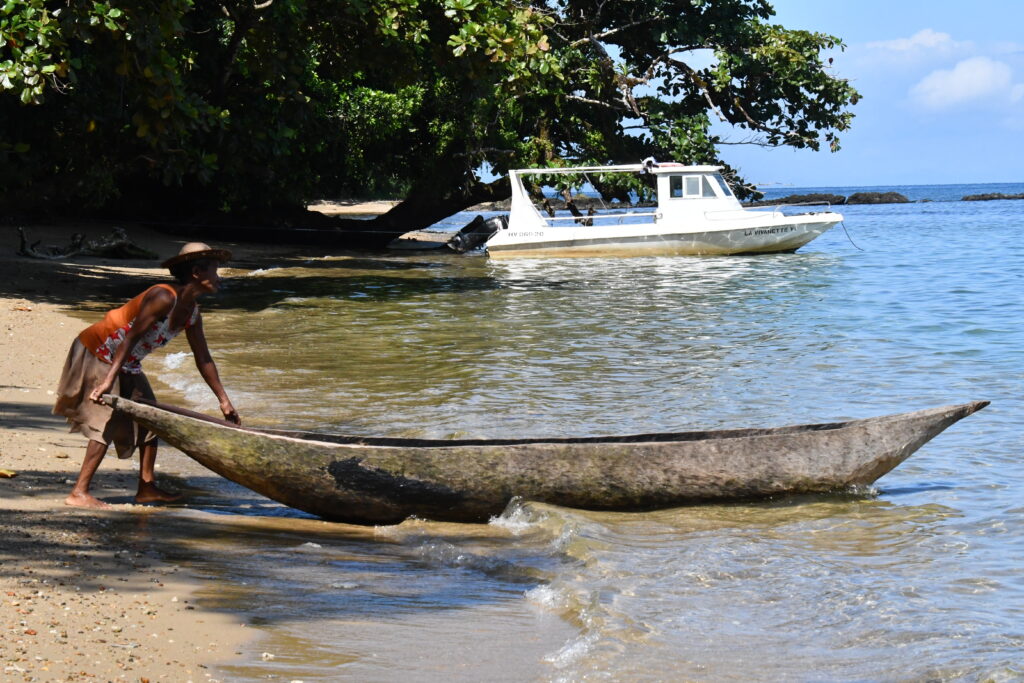
After 2 days of traveling to Madagascar, the US-based PICC Team rested up for their next leg, an in-country flight to Maroantsetra. They were greeted at the airport by the PICC Madagascar team leader, Pascal Elison, and did some shopping in the local marketplace for pencils and snacks. The next morning they loaded up all of their luggage and took a short drive to the harbor dock where they were met by the speedboat. It was a beautiful sunny day with no wind. The boat crew managed to load all of the heavy suitcases which included supplies for 200 students, plus the food and equipment for two weeks, and get it all stowed away on the boat; they were on their way to Ambodiforaha! It was a pleasant two-hour boat ride across Antongil Bay to the Masoala pennisula. There were many fisherman out on the bay in their interesting dugout canoes, some with colorful fabric sails.
As they crossed the Bay, they had incredible views of the gorgeous forested mountains of Masoala National Park rising right from the ocean beaches as far as they could see. They landed on the beach at Ambodiforaha and were greeted by many friendly helping hands and excited children.
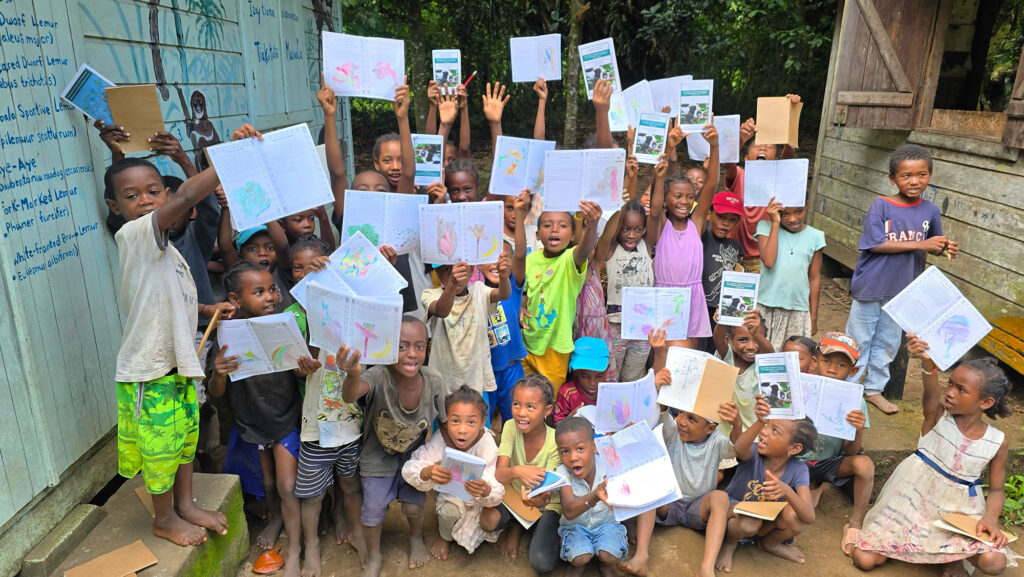
Ambodiforaha Primary School –– Pascal has been teaching the PICC lessons to children in the Ambodiforaha school for the last six years. We had heard so much about them through email and WhatsApp, so it was absolutely wonderful to finally meet them in person! The PICC Session teaching team included: Julie Vogt and Kathy West from PICC and volunteers Melanie Eisemann and David Russell. The children were appreciative and welcoming, and were thrilled to each receive their own art notebook and PICC coloring book.
Thanks to a generous donation by the IUCN, we had lemur and animal identification field guides, IUCN pocket guides, and other resources to leave with the teachers for their permanent use. The teachers learned alongside the children. After we shared a few words of introduction on how to use the pocket guides, the teacher was sharing that information one-on-one with the children, teaching them to read the distribution maps and discover which species they might see in their local forest.
We divided the children into two groups — the older kids went into the forest with Pascal, Kathy and volunteer David for an exploring hike and sketching, and the other children used their new colored pencils to explore the coloring book in the classroom, with guidance from Julie and volunteer Melanie. They were excited to learn to use binoculars to get a close look at animals they commonly saw from a distance, including a Lesser Vasser parrot. After lunch we switched and the little ones went out with Pascal and Melanie. They got to see the white fronted brown lemur! There was high energy all around as they took home their coloring and sketch books to share their adventures and new knowledge with their families.
That evening we met the children just before dark for a night hike. They all trooped comfortably through the forest, and were wearing the new (rechargeable) headlamps we had provided to them. The children and Pascal were experts at spotting lemurs and insects, and everyone had good looks. We saw a Masoala mouse lemur in a tree at the edge of the village, and farther up the trail we saw Masoala woolly lemurs and a Masoala sportive lemur. The children’s keen eyes spotted little chameleons on the branches, tiny frogs, a leaf-tailed gecko (very cryptic!), and many other things to share with us. The children and Pascal taught us so much on this hike!
Apr 16: Learning Photography
To learn photography, the children were divided into 5 groups (we had 5 DSLR cameras) and each group took a turn exploring the village and beaches with the cameras. While they waited their turn, the other groups stayed in the school room and continued using their coloring and art notebooks, using the IUCN pocket guides and field guide book resources.
This video shows the students taking photos of the sakondry insect, an edible planthopper (Zanna tenebrosa) that is being farmed on bean plants for its delicious taste and high levels of protein, essential fats, and micronutrients. The insect pictured here is just a tiny juvenile – they grow quite large when harvested.
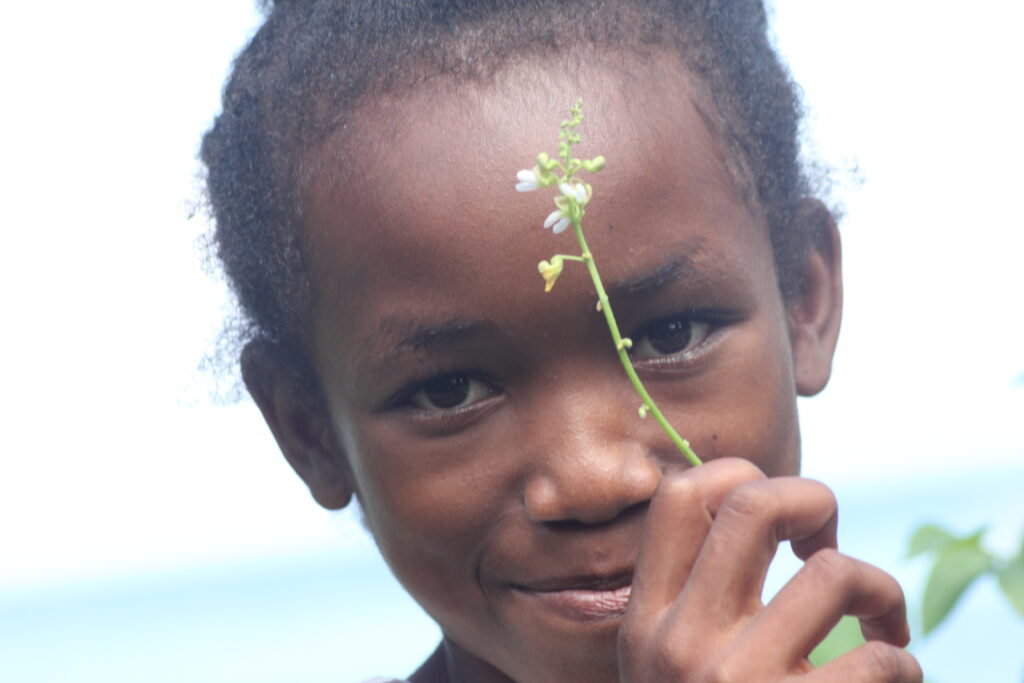
The students quickly learned photography, and took incredible photographs. Pascal was provided with an iPad and projector, and a Canon DSLR camera with a zoom lens, to continue sharing the students’ new images with the school and community. The following is a selection of some of the students’ images. More to come!
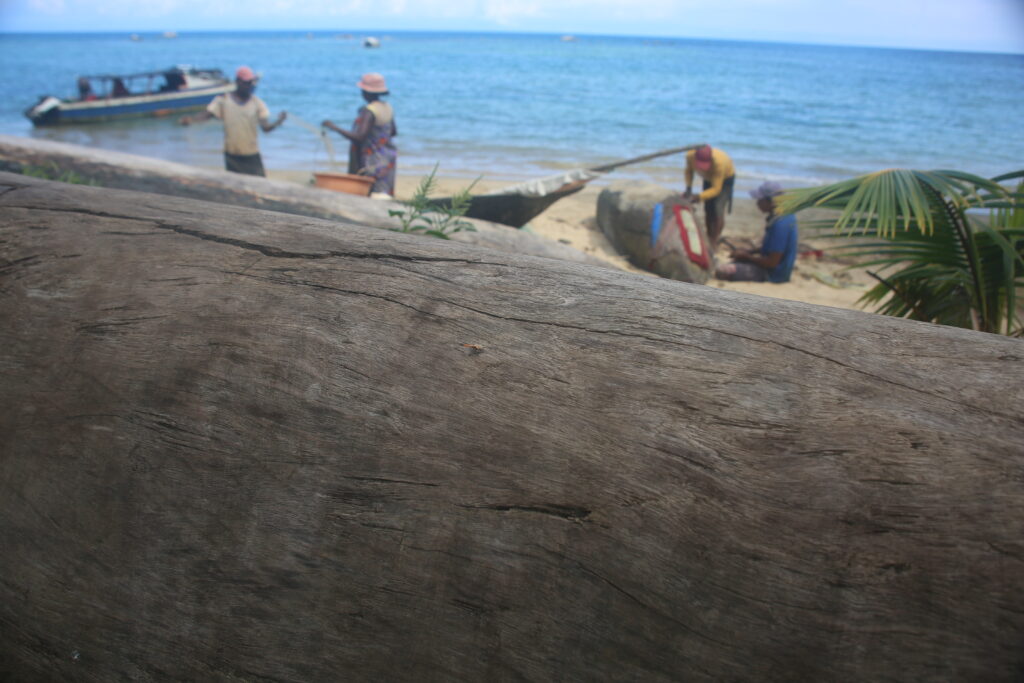
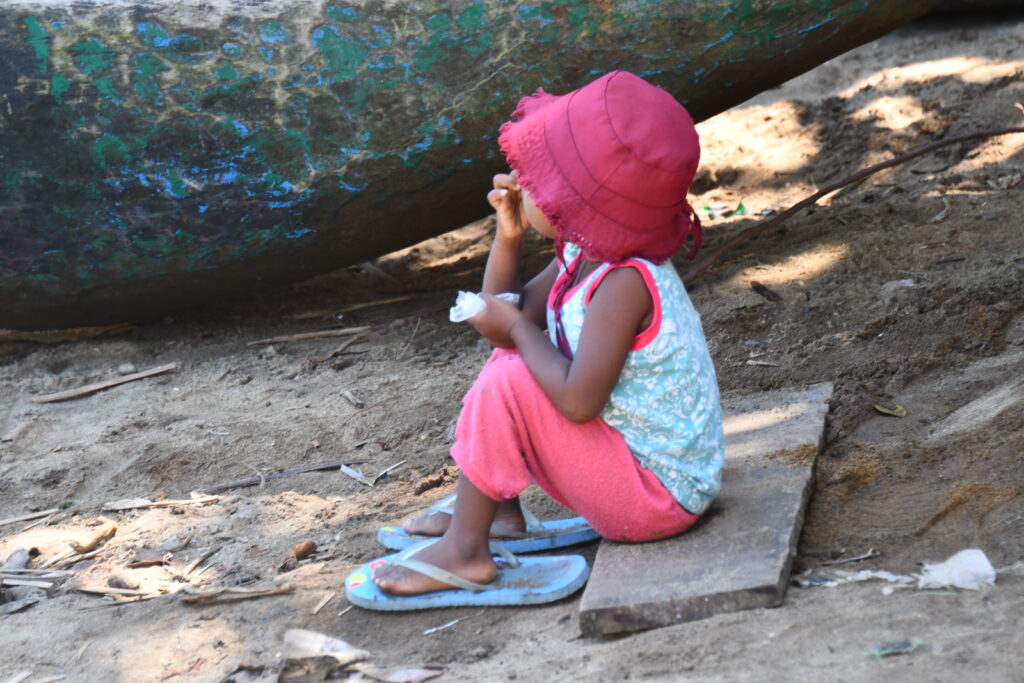
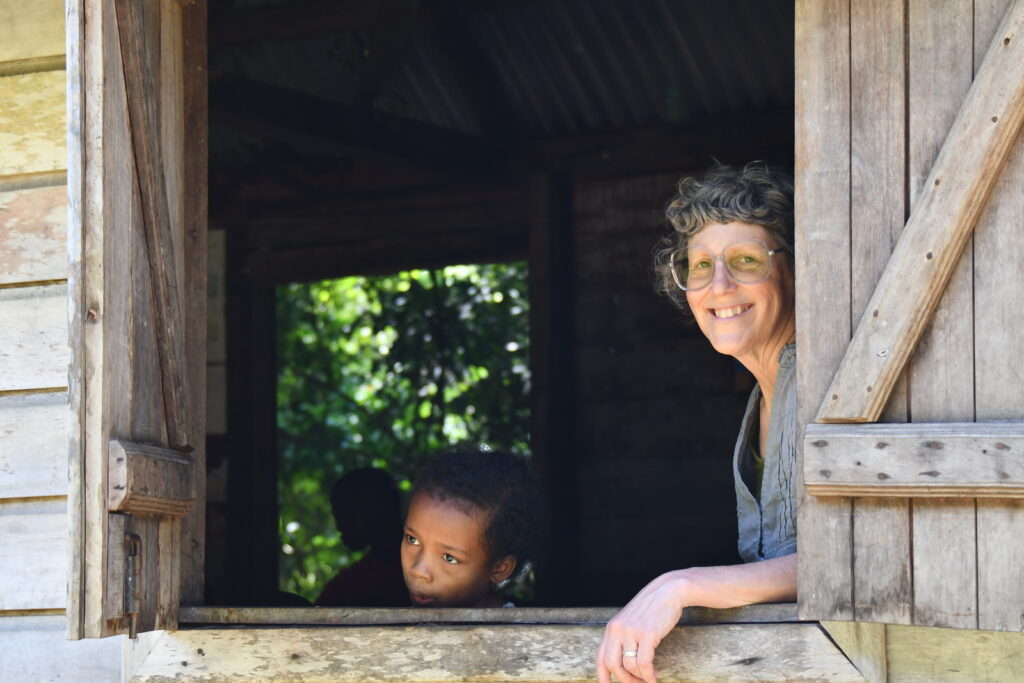
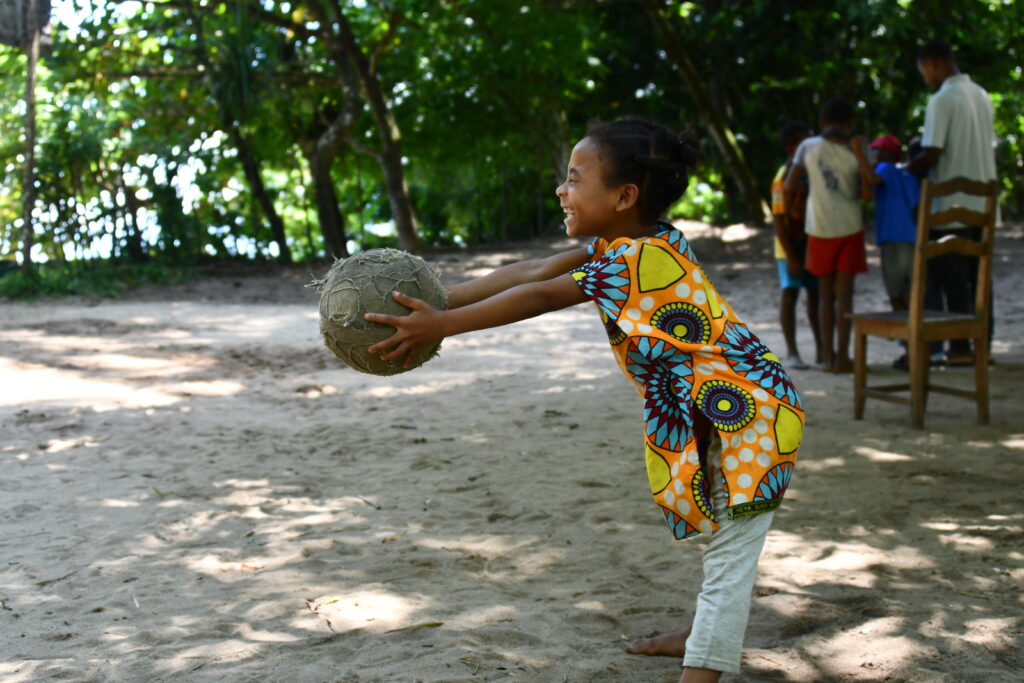
Apr 17: Celebrating their new skills ––On Friday morning the last group of students used the cameras and we finished our session, with a reminder that we would be back in the evening to have the projector show!
The team spent the afternoon putting together the evening show on the iPad, consisting of the team’s images of the children’s activities and all of the best images from the children’s photography. At the school in the early evening, Pascal hung the huge projector screen on the side of the building, the teachers and students carried out desks and benches, and we used the rechargeable, battery-powered projector to show the kids their own photos plus those that the team had taken of them. They loved it! One boy had taken photos of his father as he walked by carrying a load of wood, and the student brought him to the show so they could enjoy seeing those together. Even many days later we’d run across kids in the village reading and sharing their books and journals — so heartwarming and fulfilling!
Enjoy the following images to experience this amazing PICC session with the Ambodiforaha students!
[portfolio_gallery id=”9105″]
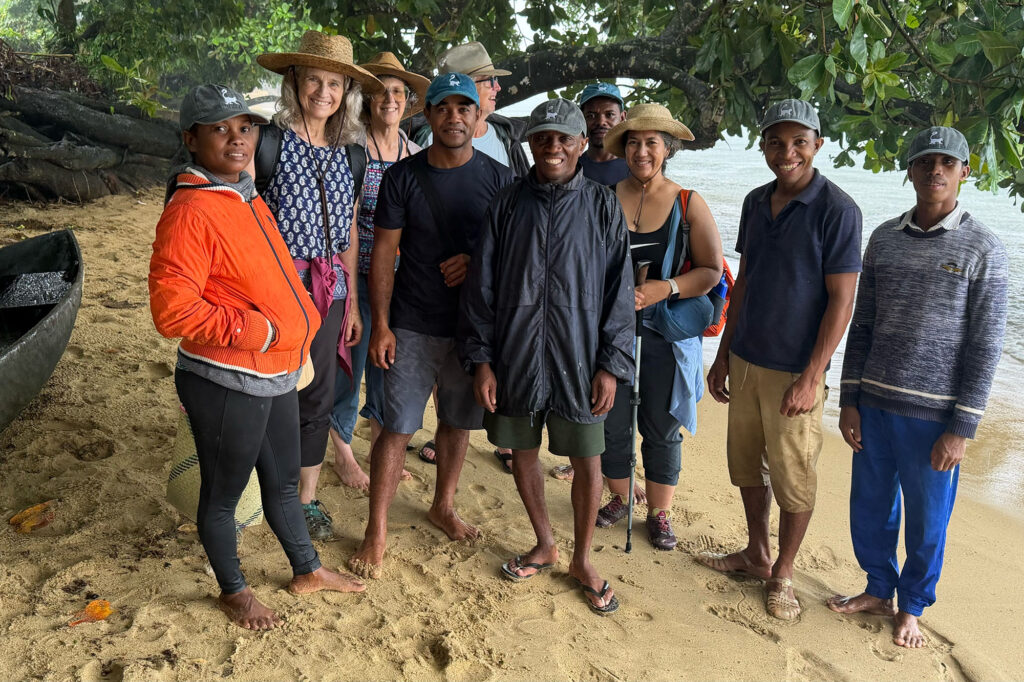
The PICC and Malagasy Team: (Left to Right) –– Anola, Kathy West, Melanie Eisemann, Pascal Elison, David Russell, chef Eddy, Landi, Julie Vogt, Yabi and Felistin.